
Published February 16, 2021
Del Norte Place… In the Heart of The Park and The City of Phoenix

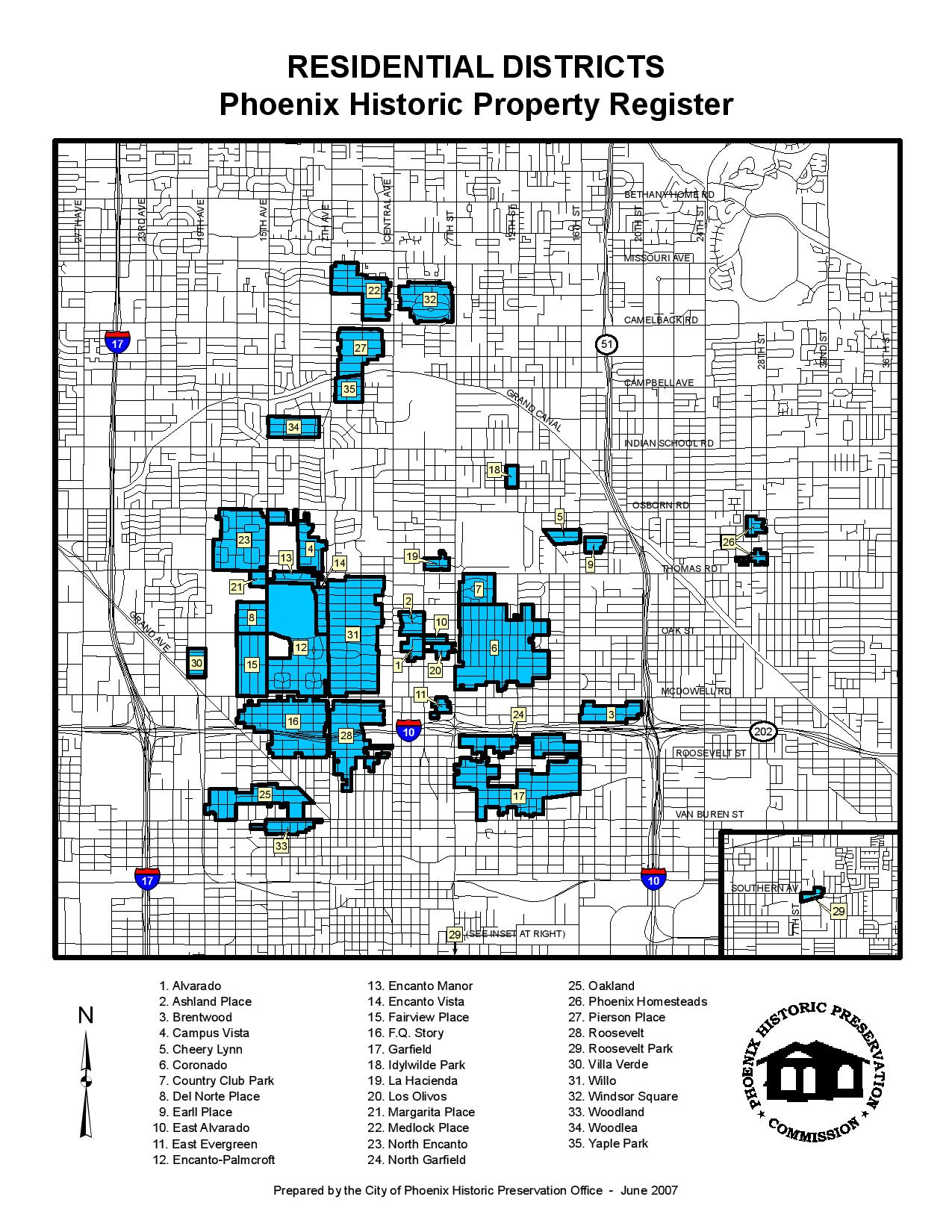
Long before it became an oasis of style and grace in the middle of a bustling city, Del Norte Place Historic District was once just a remote piece of desert. On the 21st of April 1871, William A. Hancock filed the first homestead patent to be recorded at the Arizona Territorial Capital in Tucson for this quarter section of land. Territorial Veterinarian Dr. James Collier Norton subsquently purchased the historic Hancock homestead at the turn of the century. And at the northern edge of the property, Dr. Norton constructed his home, a large two story Mission Style structure he christened Del Norte House, as he anticipated residential development on the southern half of the land.
Indeed, the downtown core was well developed by 1920 with northward residential construction boosted by Cave Creek Dam and canal system construction in 1923. Del Norte Place was then opened to the public on April 3, 1927.
Envisioned as a neighborhood of English cottage Style homes based on the popular architectural revival in the late 1920s, the original Del Norte subdivision in 1927 offered 84 lots between Lewis Avenue on the north and Encanto Boulevard on the south. Homes were priced between $5,000 and $7,000 and were constructed of red birch with contrasting brick trim and steeply gabled roofs. Most homes included garages.
A second subdivision two years later established its present northern boundary at Virginia Avenue. Public and commercial development was in stride as well with the establishment of Biltmore Hotel, the Heard Museum, Phoenix College and the Orpheum Theatre.
Along with the rest of the nation, the Great Depression of the 1930s slowed down the growth of Phoenix. 1934 saw Dr. Norton selling the remainder of the parcel to the City of Phoenix for the development of the Encanto Golf Course with other parcels. Opening in 1937, the city's first large recreational park contributed to the new identity of the neighborhood which was now surrounded by greenbelt on three sides. "Del Norte Place… In the Heart of the Park."
Development and construction received a shot in the arm when the National Housing Act of 1934 under the wing of the Federal Housing Administration (FHA) brought home financing within reach to most Americans. Del Norte experienced the most rapid development in its history with a total of 77 of the district's 151 homes constructed during this period.
On the other hand, FHA design standards brought new looks: from simplified to adorned versions of the Period Revival style with the latter version representing regional, southwestern influences in Spanish Colonial Revival and Monterey Styles. These homes were typical one story, stuccoed brick dwellings with low pitched tile roofs with ornamentation generally limited to modest tile work, accentuating rooflines and doorways.
Early Ranch Style homes emerged during this phase as an alternative to the Period Revivals styles, eventually becoming the second most prevalent style of architecture in the district. These simple brick structures sported a projecting gabled wing and an "L" shaped design typically ornamented with brick work and trademark small, circular window beside the front door.
Del Norte architecture evolved to the style of French Provincial Ranch style homes in the early 1940s, characterized by an "L" shaped or irregular floor plan, a low pitched hip roof sheathed with wood shakes, and steel casement windows.
The Second World War not only slowed construction but also saw the most restrictive period of regulation in the history of the American housing industry with house dimensions and number of rooms based on family size and ages. In response to the rationing of materials, doorknobs were changed from metal to glass, cast iron tubs and sinks were substituted by tiled showers and ceramic bowls while rubber took over plastic.
The last stage of concentrated development took place postwar with thousands of homes in the 1950s were built in the new Ranch Style: a simplified form of the French Provincial Ranch. Nicknamed the "California Ranch," this style was notable for its gable or hip roof extended over the entire house, brick wainscoting around the exterior wall, and a board and batten, or painted brick on the upper wall surfaces.
The Del Norte Neighborhood Association was formed in 1992 to promote restoration and preservation of the district's heritage: 16 individual architectural styles that pay tribute to long range city planning and the dramatic evolution of 20th Century Phoenix infused with the unique community spirit and way of life found within the surrounding greenbelt of Encanto Park and Golf Course, all these and more right in the heart of Phoenix.
Source:
historicphoenix.com

Get Your Home Sold With The Shanna Day Team Beautify/Ready To Sell Program!

 |
 |
FUTURE QUESTIONS
If you have any topics or questions you would like answered, contact The Shanna Day Dream Home Team - we’ll find the answers for you!
Shanna Day Dream Home Team
Keller Williams Realty East Valley
480-415-7616
Del Norte Place… In the Heart of The Park and The City of Phoenix

Shanna Day Team
Operator & Expansion Partner | Shanna Day Team | Keller Williams Realty Phoenix
or another way